Weight
Carry-on first
Every Kiboko 2.0 is built to international carry-on size, and kept light so more of the allowance goes to your camera, not the bag.



About Gura Gear · Since 2009
We make camera bags for photographers who fly far with heavy glass: sized for the carry-on, light enough to leave room for the lens, and tough enough for the bush.
The founders
Flew 285,000 miles a year before the pandemic, on planes, trains and sometimes with gear strapped to a yak. Tells the whole story, from the Amsterdam gate to the campfire, in a 9-minute film.
Watch Trevor's story →A wildlife photographer whose pictures of Africa run through this site, from the Skeleton Coast to the Maasai Mara.
About Andy →How it started
In 2006, Trevor Peterson and wildlife photographer Andy Biggs flew to East Africa with pro bodies, 500mm f/4 lenses and a lot of big glass. Their camera bags let them down twice.
Changing planes in Amsterdam meant a gate check. The legal carry-on limit was about 10 to 12 pounds. Their bags were far heavier. It took a long, spirited conversation with the gate agent to get the gear on the plane.
Out in the field, with the shots they had flown halfway around the world for, both bags failed.
“Interestingly enough, each of us had a failure. One, the strap burst, and one, the zipper blew out.”Trevor Peterson, co-founder
That night, over a little too much Tusker ale, they complained about their bags and grabbed the proverbial cocktail napkin. They sketched a bag that worked in a safari vehicle, with a target nobody else was chasing: 4 pounds empty.
In a bag the same size, that leaves 6 to 8 more pounds for the gear that matters.
They used the best materials they could find, even from other industries. Racing sailcloth for the shell, and Gura Gear was the first bag company to use it. Crash-helmet foam in the dividers. A light lining so you can find a lens at golden hour. Zipper pulls you can work with gloves on. Every round asked the same question: how do we take weight out of this?
Sixteen years after a blown zipper started it all, the factory called. The zipper pulls we specify had a six-week backlog, and a no-name part could arrive in two days. Trevor said no, and took the six-week delay.
“It's not a product where we substituted a cheaper part to hit a production deadline.”Trevor Peterson, co-founder
Our 30L Kiboko weighs 3.9 lb (1.77 kg), or 4.05 lb (1.84 kg) as the 30L+ with its laptop sleeve, both empty and weighed in studio conditions. Every bag since follows the same rule: if it doesn't earn its weight, it doesn't go in. We're photographers, and we make the bags we want to carry.
What we believe
Every Kiboko 2.0 is built to international carry-on size, and kept light so more of the allowance goes to your camera, not the bag.
Our patented butterfly access opens one side of the camera bay at a time, so you reach a lens without unpacking everything else. Keep two mounted cameras ready, or pack camera on one side and clothes on the other.
Since the beginning we have built our bags with X-Pac VX-21, a racing sailcloth made in the USA by Dimension Polyant: light, tough and water-resistant. We were the first bag company to use it. The sailcloth makers thought we were a little insane; today they list us as a trusted partner.
We carry every new bag on our own trips for months before it goes on sale, and release it when it's ready, not on a yearly schedule. Then we cover it for 5 years against defects in materials and workmanship.
Since then
Andy and Trevor fly to Tanzania. One strap bursts, one zipper blows out, and a napkin sketch starts it all.
Andy and Trevor turn the napkin sketch into a bag and pre-launch it.

After 9 or 10 rounds of design, the original Kiboko launches with butterfly access at 3.99 lb (1.81 kg), empty and weighed in studio conditions.

A travel bag for the laptop, drives and cables, with room left for spare lenses: the Kiboko's travel partner.

Rebuilt from customer feedback, with compartments sized for today's cameras, laptops and tablets.
See Kiboko 2.0 →
The everyday carry bag, updated, in 13" and 16".
See Chobe 2.0 →
Made for mirrorless: a roll-top, a rear camera compartment with a side door, in a slim shape.
See the Commuter →
The 30L gains a 16" laptop sleeve.
See the 30L+ →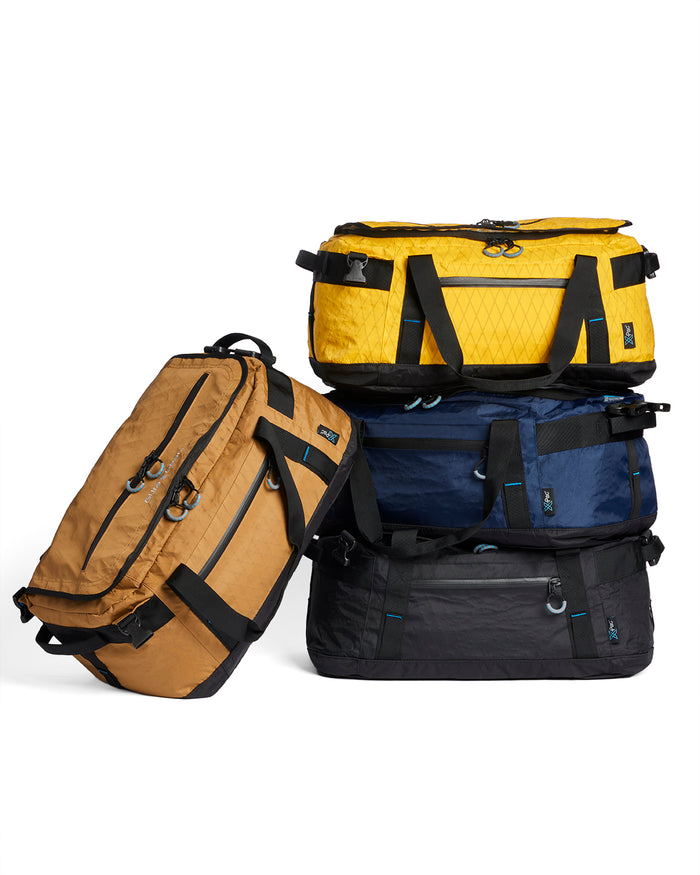
A soft duffel from 40 to 100 liters that also carries as a backpack.
See the Mara →
A 6L sling, a 26L+ commuter and a 14" Chobe join the range.
See the Sling →In the field
 Marsel van OostenPro Team · Wildlife Photographer of the Year
 Jen RitchiePro Team · wildlife & portraits
 Andy BiggsCo-founder · African wildlife
 Joshua HolkoPro Team · polar wildlife
Our photographersMeet the whole teamEvery Pro Team and ambassador photographer who carries Gura Gear.→
 Watch · 2:52
A short film about process and travel with the Kiboko City Commuter.
Our Pro Team also includes Wildlife Photographer of the Year winners Jonathan & Angela Scott. Meet the team →
Awards
 Fstoppers · 2026Best Premium Pack · Kiboko 2.0 30L+
 PetaPixelBest Day-Use Backpack for Photographers · Kiboko City Commuter
 Lucie Awards · 2022Kiboko City Commuter